In today's fast-paced business landscape, the need for streamlining operations and maximizing efficiency has never been more crucial. Business process automation services offer a solution to these challenges by leveraging cutting-edge technologies to automate repetitive tasks and optimize workflows. Let's delve into the world of business process automation services to understand how they revolutionize the way businesses operate.
Overview of Business Process Automation Services
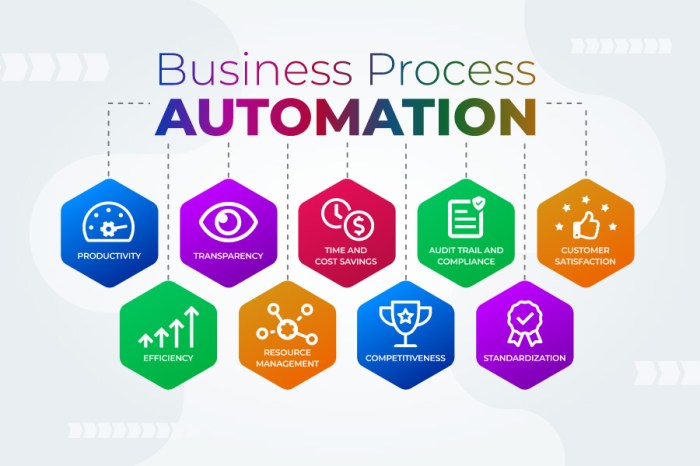
Business Process Automation Services refer to the use of technology to streamline and automate repetitive tasks and workflows within an organization. This includes automating manual processes, integrating systems, and leveraging software applications to increase efficiency and reduce human error.Automating business processes is crucial for organizations looking to improve operational efficiency, reduce costs, and enhance productivity.
By automating repetitive tasks, employees can focus on more strategic and value-added activities, leading to increased overall performance and competitiveness in the market.
Examples of Industries Benefiting from Automation Services
- Manufacturing: Automation helps optimize production processes, reduce downtime, and improve quality control.
- Finance: Automation streamlines financial transactions, reduces errors, and enhances compliance with regulations.
- Healthcare: Automation improves patient care, streamlines administrative tasks, and ensures accurate record-keeping.
- Retail: Automation enhances inventory management, streamlines supply chain operations, and improves customer service.
Benefits of Implementing Business Process Automation
Implementing business process automation can bring about numerous advantages for a company, enhancing efficiency, reducing errors, and improving overall productivity.
Increased Efficiency
- Automation allows tasks to be completed faster, reducing the time it takes to complete processes.
- Eliminates the need for manual data entry, reducing the risk of human error.
- Streamlines workflows and reduces bottlenecks, improving overall operational efficiency.
Cost Savings
- Reduces labor costs by automating repetitive tasks, allowing employees to focus on more strategic activities.
- Minimizes errors and rework, saving time and resources.
- Optimizes resource allocation and reduces operational costs in the long run.
Improved Accuracy and Compliance
- Automation ensures consistency in processes, reducing the likelihood of errors.
- Helps maintain compliance with regulations and standards by enforcing predefined rules and workflows.
- Provides an audit trail for all activities, enhancing transparency and accountability.
Enhanced Customer Experience
- Automation speeds up response times, leading to better customer service.
- Improves communication and information sharing within the organization, resulting in a seamless customer experience.
- Allows for personalized and timely interactions with customers, enhancing satisfaction and loyalty.
Real-Life Case Studies
Company X implemented a workflow automation solution that reduced processing time by 50% and improved accuracy by eliminating manual errors.
Company Y automated their invoice processing, resulting in a 30% reduction in costs and faster payment cycles, improving cash flow.
Common Technologies Used for Business Process Automation
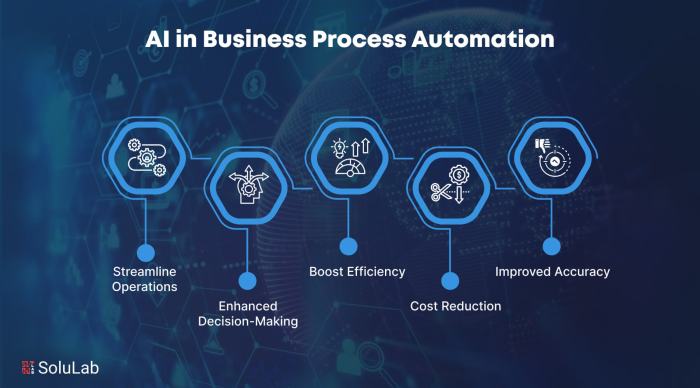
Business process automation relies on a variety of technologies to streamline operations and increase efficiency. Let's explore some key technologies used in this field:
Robotic Process Automation (RPA)
Robotic Process Automation (RPA) involves the use of software robots or bots to automate repetitive tasks that are rule-based. These bots can perform tasks such as data entry, invoice processing, and customer support, freeing up human employees to focus on more complex and strategic activities.
Artificial Intelligence (AI)
Artificial Intelligence (AI) plays a crucial role in business process automation by enabling machines to learn from data, make decisions, and perform tasks that typically require human intelligence. AI technologies such as natural language processing, machine learning, and computer vision are used to automate processes and improve decision-making.
Workflow Automation
Workflow automation software is designed to streamline and automate business processes by managing and tracking tasks, data, and documents. It helps organizations optimize their workflows, reduce errors, and improve collaboration among team members.
Machine Learning
Machine learning is a subset of AI that focuses on developing algorithms and models that enable computers to learn from data and make predictions or decisions without being explicitly programmed. In the context of business process automation, machine learning algorithms can analyze large datasets, identify patterns, and optimize processes for greater efficiency.
Steps to Implement Business Process Automation

Implementing business process automation can streamline operations, increase efficiency, and improve overall productivity within a company. Here are the essential steps to successfully initiate the automation process in your organization:
1
. Assess Current Processes
Before diving into automation, it is crucial to assess and understand your current business processes. Identify bottlenecks, inefficiencies, and areas that can benefit from automation. This evaluation will help you prioritize which processes to automate first.
2. Set Clear Objectives
Define clear and specific objectives for implementing automation. Whether it is to reduce manual errors, accelerate task completion times, or enhance customer satisfaction, having well-defined goals will guide your automation strategy.
3. Choose the Right Automation Tools
Selecting the appropriate automation tools is key to successful implementation. Consider factors such as scalability, integration capabilities with existing systems, user-friendliness, and cost-effectiveness. Conduct thorough research and demos to find the tools that best fit your business needs.
4. Develop an Implementation Plan
Create a detailed implementation plan that Artikels the timeline, resources needed, responsibilities, and milestones for each phase of the automation process. Ensure that all stakeholders are involved and informed throughout the implementation.
5. Pilot Test and Iterate
Before fully deploying automation across all processes, conduct pilot tests to identify any issues or areas for improvement. Gather feedback from users and make necessary adjustments to optimize the automation workflows.
6. Train Employees
Provide comprehensive training to employees on how to use the new automation tools and workflows effectively. Ensure that they are comfortable with the technology and understand the benefits it brings to their daily tasks.
7. Monitor and Measure Performance
Continuously monitor the performance of automated processes and measure key metrics to track the impact of automation on productivity, efficiency, and cost savings. Use this data to make informed decisions for further enhancements.By following these steps and considering the factors mentioned above, your company can successfully implement business process automation and reap the benefits of streamlined operations and improved efficiency.
Challenges Faced in Business Process Automation
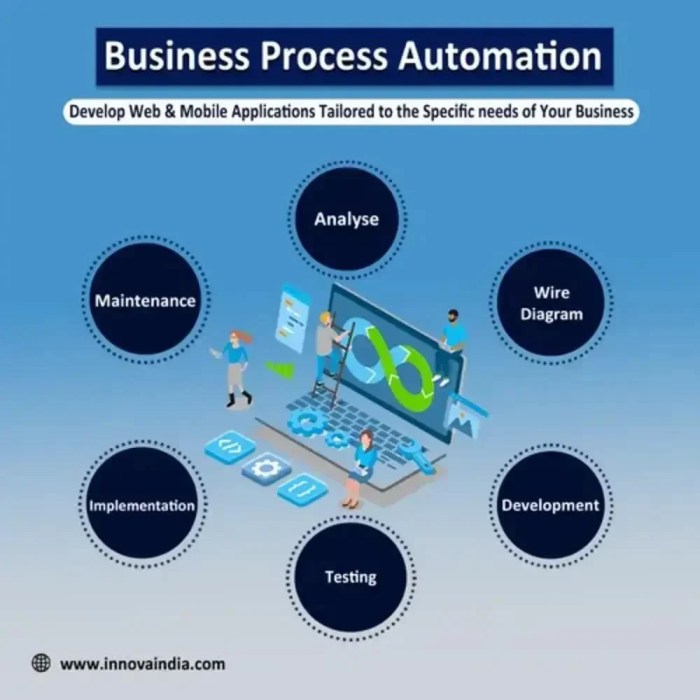
Implementing business process automation can come with its own set of challenges that organizations need to address in order to ensure a successful transition. Let's explore some common challenges faced in business process automation and strategies to overcome them.
Lack of Clear Process Understanding
- One of the key challenges in automation is the lack of clear understanding of existing processes within the organization.
- Organizations need to conduct a thorough process analysis to identify bottlenecks and inefficiencies before automating.
- Engaging process owners and stakeholders in this analysis can help in gaining a comprehensive understanding of the processes.
Resistance to Change
- Resistance from employees who fear losing their jobs or are apprehensive about the new technology can hinder the automation process.
- Organizations should focus on transparent communication about the benefits of automation and involve employees in the decision-making process.
- Providing training and support to employees to develop new skills and adapt to the changes can help in overcoming resistance.
Integration Challenges
- Integrating automation tools with existing systems and software can be a complex process, leading to compatibility issues.
- Organizations need to ensure that the automation tools they choose are compatible with their current systems and can seamlessly integrate with them.
- Working closely with IT teams and vendors to address integration challenges can help in streamlining the process.
Data Security Concerns
- As automation involves handling sensitive data, security concerns can arise regarding data breaches and compliance with regulations.
- Implementing robust security measures such as encryption, access controls, and regular audits can help in mitigating these risks.
- Organizations should also ensure compliance with data protection regulations to maintain data security and privacy.
Monitoring and Maintenance
- Ongoing monitoring and maintenance of automated processes are essential to ensure optimal performance and identify any issues or errors.
- Organizations need to establish regular monitoring mechanisms and allocate resources for maintenance activities.
- Implementing automated alerts and notifications can help in identifying and addressing issues proactively.
Final Thoughts

As we wrap up our exploration of business process automation services, it becomes clear that embracing automation is no longer a choice but a necessity for businesses aiming to stay competitive and agile in a rapidly evolving market. By implementing these services, companies can unlock new levels of productivity, cost savings, and operational excellence.
FAQ Overview
What is the primary goal of business process automation services?
The primary goal is to streamline business operations by automating repetitive tasks and optimizing workflows to improve efficiency and productivity.
How can businesses benefit from implementing automation services?
Businesses can benefit from increased efficiency, cost savings, improved accuracy, and enhanced scalability by implementing automation services.
What are some key technologies used in business process automation?
Key technologies include Robotic Process Automation (RPA), Artificial Intelligence (AI), and workflow automation tools that contribute to streamlining processes.